Eingabebereich--------------------OLD_TEXT---------------------Input area |
  
|
Eingabebereich--------------------OLD_TEXT---------------------Input area |
|
Im Eingabebereich für die Zeitanalyse können die Parameter Arbeit an Sitz-Steh-Arbeitsplatz und Anwendung des hohen Methodenniveaubereichs jeweils als Checkbox eingestellt werden (siehe Abbildung Eingabebereich für die Zeitanalyse).

Abbildung 80: Eingabebereich für die Zeitanalyse
iArbeit an Sitz-Steh-Arbeitsplatz hat nur Auswirkungen bei Verwendung der Verrichtung Hinsetzen. Setzen und wieder Aufstehen bei einem Sitz-Steh-Arbeitsplatz wird mit KC mit der Häufigkeit 2 analysiert, welches in der Spalte A x H (Anzahl x Häufigkeit) ausgegeben wird. |
Für die Anwendung eines hohen UAS-Methodenniveaubereichs werden eine hohe Routine des Mitarbeiters und ein entsprechend gestalteter Arbeitsplatz vorausgesetzt. Der hohe Methodenniveaubereich hat in der Bewertung nur Auswirkungen bei gleichzeitigem Aufnehmen und Platzieren von je einem Gegenstand pro Hand. Dabei wird höchstens ein Interaktionsgrundvorgang analysiert. Bei aktivierter Checkbox wird dieser als Platzieren und andernfalls als Aufnehmen und Platzieren analysiert.
Weiterhin können Bezeichnung, Beginn, Inhalt, Ende und Begrenzung in Textfeldern angegeben werden, welche in den Kopffeldern der Export-Datei zu finden sind.
Unter Verwendete Objekte werden alle verwendeten Objekte mit Objekt-ID, Name, Masse in kg und der Information über dessen Sperrigkeit angezeigt (siehe Abbildung Eingabebereich für die Zeitanalyse). Die Zeitanalyse überprüft die Bounding Boxen aller Objekte automatisch auf deren Sperrigkeit. Wird diese erkannt, ist die Checkbox sperrig aktiviert bzw. wird sie nicht erkannt, ist sie deaktiviert. Wurde dies automatisch erkannt, ist das am Icon  erkennbar. Widerspricht sich die Nutzereingabe mit der erkannten Sperrigkeit (siehe Benutzerdefinierte Objektparameter), wird
  angezeigt und die Eingabe sollte überprüft werden.
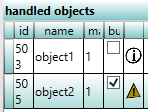
Abbildung 81: Verwendete Objekte
--------------------OLD_TEXT---------------------
In the input area of the time analysis sub-tab, the parameters Work at sit-stand workplace and High method level range application can be set by checking the checkbox provided (see figure Input area of the time analysis).
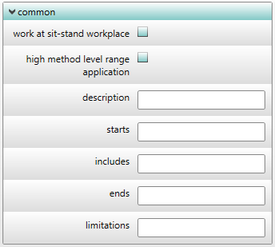
Figure 82: Input area of the time analysis
iThe results of the task Sit down in MTM-UAS are affected by the parameter Work at sit-stand workplace. Sitting and standing again in sit-stand workplace is analyzed by KC with a frequency of 2, which can be found in the column c x f (count X frequency). |
In order apply high level MTM-UAS method; experienced employees and appropriately designed workplace are required. The high level method range application affect the result only in case of Pick and place task with both the hand holding different objects executing the task simultaneously. Mostly a basic interaction process is analysed. The tasks will be analysed as Place if the Checkbox is checked, otherwise analysed as Pick and place.
Furthermore, there are text fields for description, starts, includes, ends, and limitations, which will be in the export file's header area.
Down below, information like object-ID, name, mass in kg and whether the object is bulky or not, of the handled objects can also be seen (see figure Handled objects). The time analysis checks the bounding boxes of all objects automatically for their bulkiness. Is is detected, the checkbox bulky is activated respectively deactivated if bulkiness is not detected. Has it been automatically detected, the icon is visible. If the user defined bulkiness (see User defined object parameters) and the detected bulkiness do not match, the icon is shown and the input should be checked.
Figure 83: Handled objects